
What Brands and Retailers Need to Know About the Minnesota Cannabis Industry After its First Year

Introduction
Minnesota legalized adult-use cannabis in August 2023, and Tribal Nations opened the first dispensaries on their lands soon after. State-licensed retailers didn't start selling until September 16, 2025, after two years of rulemaking, a license lottery and a slow build-out of in-state supply.
One year in, the Office of Cannabis Management (OCM) reports roughly $150 million in adult-use sales and $100 million in medical sales, with 369 licensed cannabis businesses. Sales are climbing steadily: OCM's Cannabis Market Monitor shows monthly adult-use sales rising from about $10 million in January 2026 to $17 million by June, as retail sites grew to 194.
Supply is the story behind the slow start. Minnesota retailers can only sell cannabis grown in state, and at the end of 2025 just four large-scale cultivators held licenses. That is changing fast: plants in the state's tracking system jumped from about 72,000 to nearly 487,000 over the past year, and OCM expects that crop to reach shelves this fall.
Where Minnesota stands today
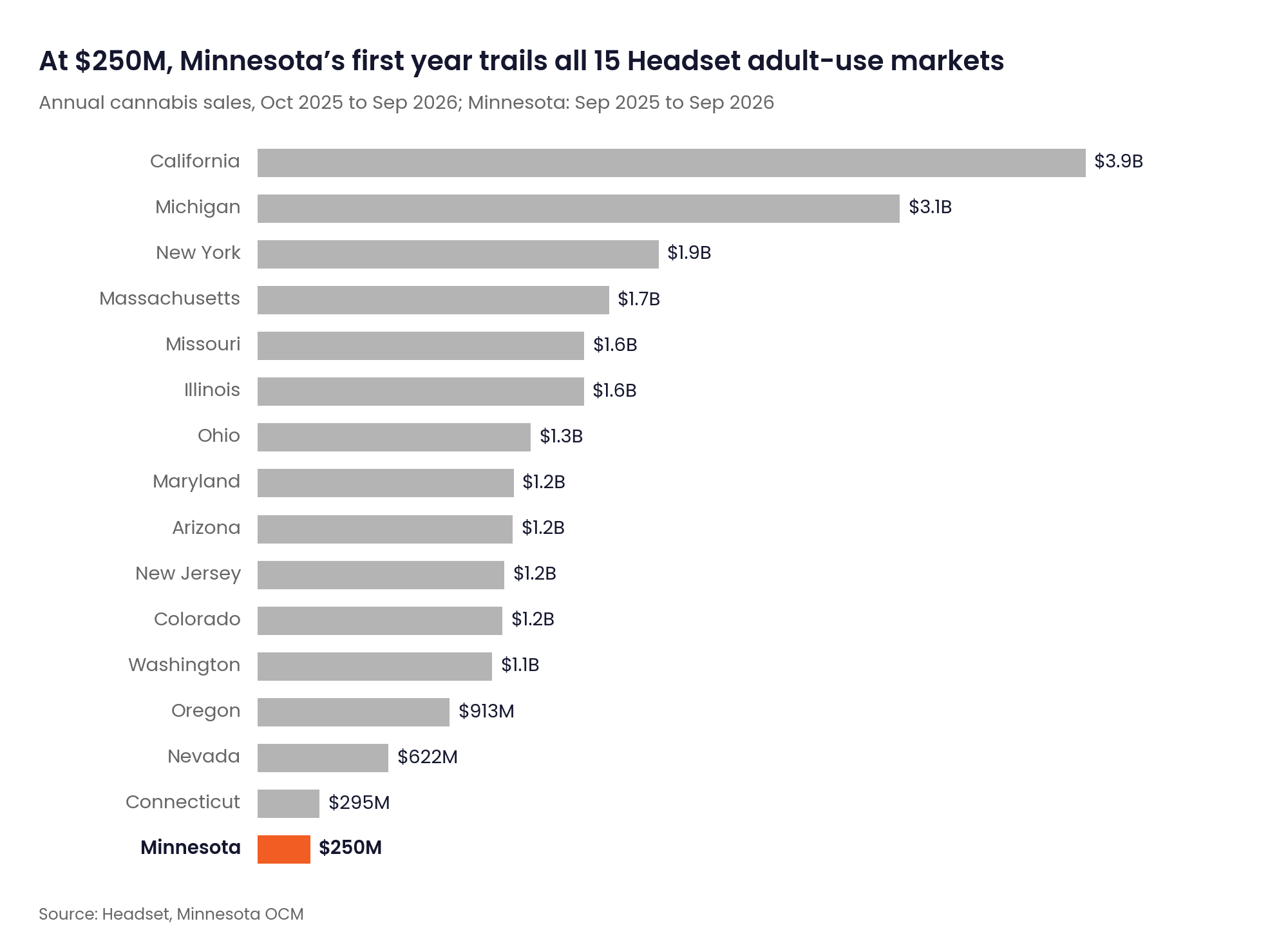
Minnesota's roughly $250 million first year puts it just below Connecticut, a state with about two-thirds of its population. Per resident, that's about $43 in sales, against a median of $160 across Headset's 15 adult-use markets.
The gap is closing. June's combined $26 million month annualizes to more than $300 million, and that excludes sales on Tribal lands, which OCM doesn't track. Minnesota is ramping the way New York did, store by store and harvest by harvest, rather than converting an existing medical market overnight like Missouri and Maryland. Slower, but steady.
Pricing and assortment
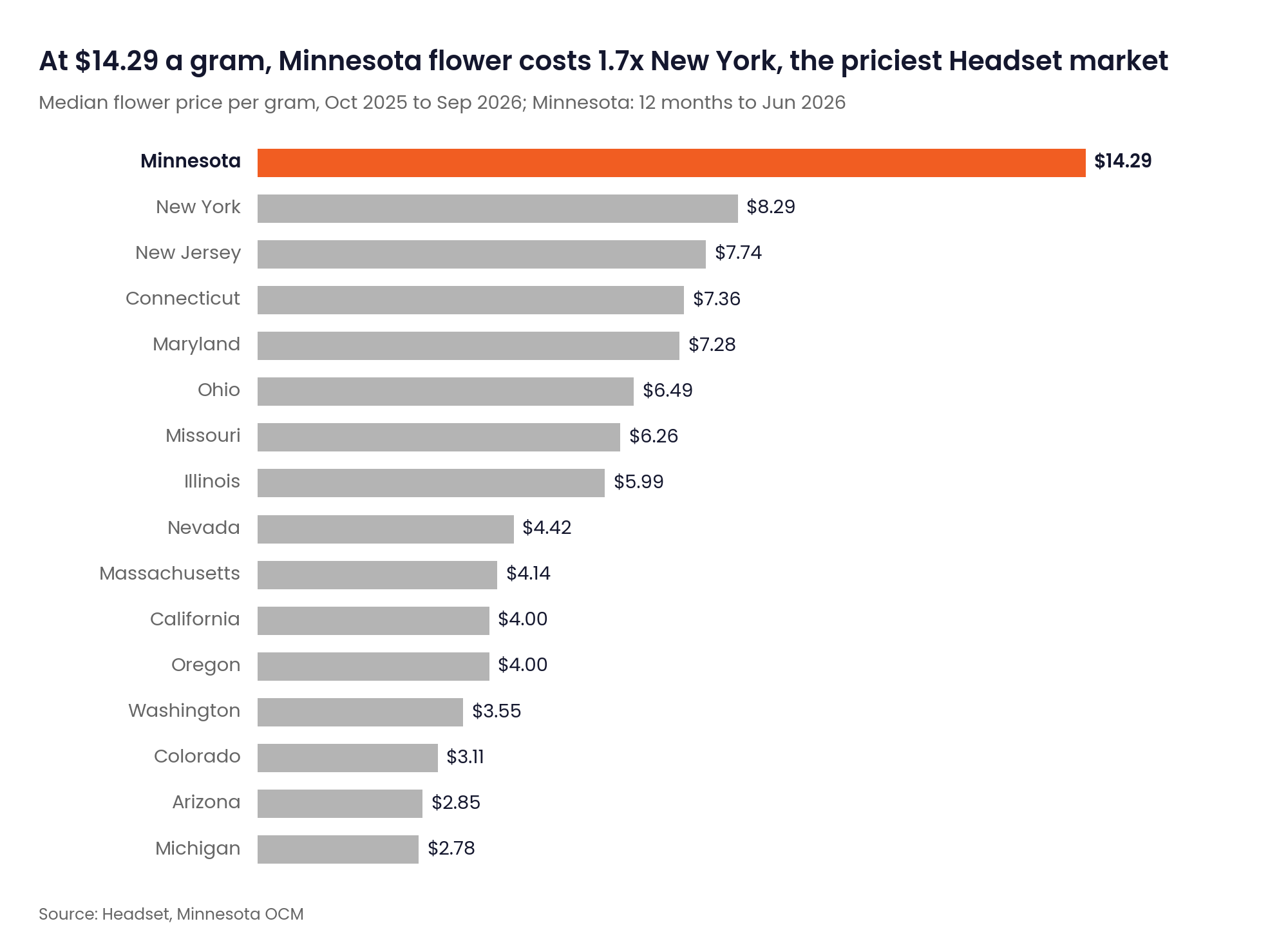
Price is Minnesota's biggest hurdle. OCM's Cannabis Market Monitor puts the median adult-use flower price at $14.29 per gram over the 12 months to June 2026, up from the $13.54 OCM reported in January. New York is the priciest market Headset tracks at $8.29 and Michigan the cheapest at $2.78. Minnesota shoppers also pay a 15% cannabis gross receipts tax on top of the 6.9% state sales tax.
The product mix reflects that early scarcity too. OCM ranks Minnesota's adult-use sales as flower first, then vape concentrates, pre-rolls and edibles last. That tracks the U.S. mix in Headset data (flower 39%, vapor pens 26%, pre-rolls 16%, edibles 12% of sales), with one twist: Minnesotans have bought hemp-derived THC edibles and beverages outside dispensaries since 2022. A federal hemp change taking effect this December will move some of that demand into licensed stores. How much depends on Minnesota's own lower-potency hemp rules, which stay in place.
Where the market is heading
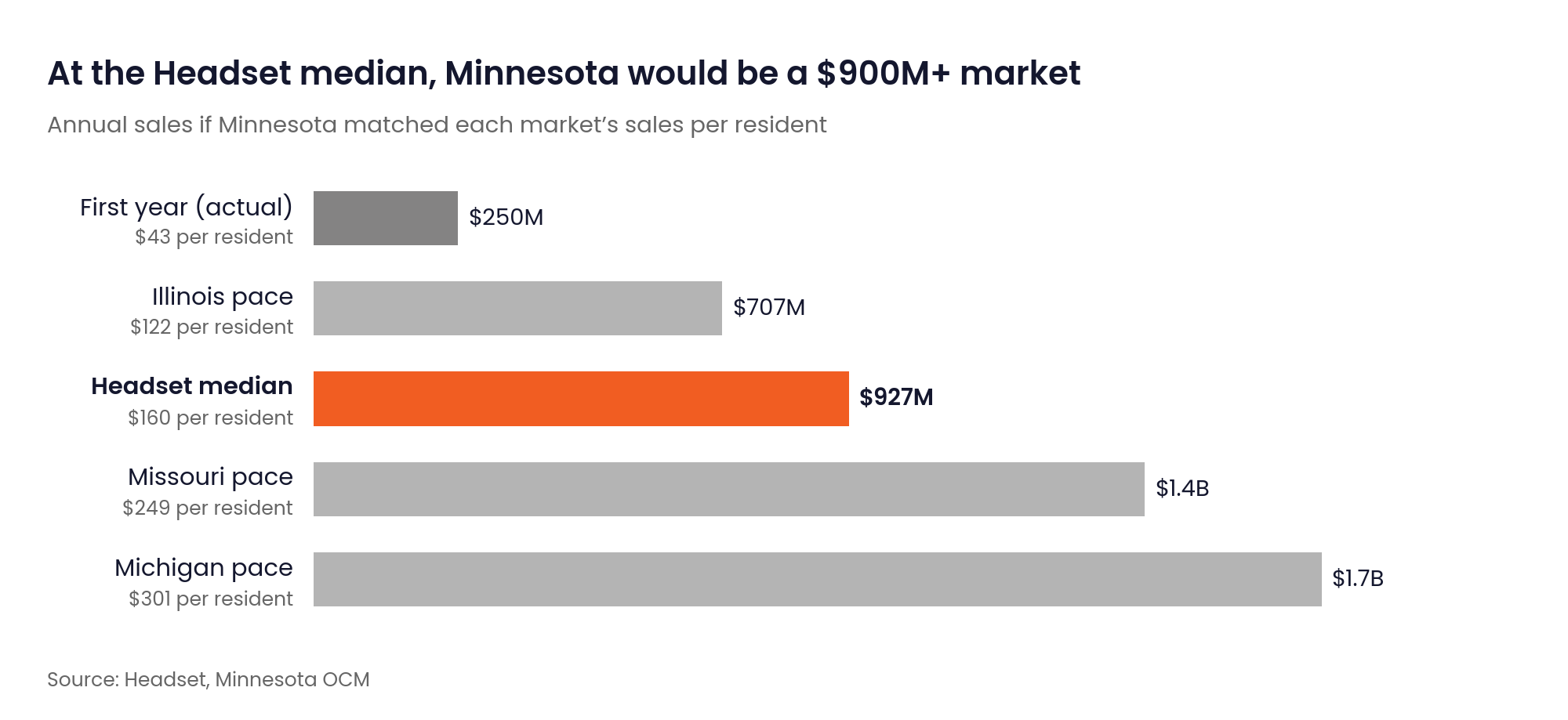
Applying the median sales per resident across Headset's adult-use markets ($160) to Minnesota's 5.8 million residents puts a mature market at about $925 million a year. That would place Minnesota between Oregon and Washington.
Where Minnesota lands in that range comes down to two levers:
- Access. An OCM-commissioned study found the state needs 381 retail licenses to meet demand. With 194 adult-use retail sites open, Minnesota is about halfway there.
- Price. Michigan and Missouri, the two highest-spending markets per resident, pair broad retail access with prices well below Minnesota's. The new harvest should pull prices down; how far will decide whether Minnesota trends toward Illinois or Missouri.
Geography is on Minnesota's side. Like Michigan and Illinois before it, Minnesota is surrounded by states without adult-use sales (Wisconsin, Iowa and both Dakotas), which gives its border stores a built-in pool of out-of-state shoppers once prices are competitive.
Minnesota took longer than most to get here. Now the pieces are in place: supply is scaling, stores are opening and sales are rising every month. For brands lining up distribution and retailers scouting locations, the time to win shelf space is before the market reaches full size. That window is open now.